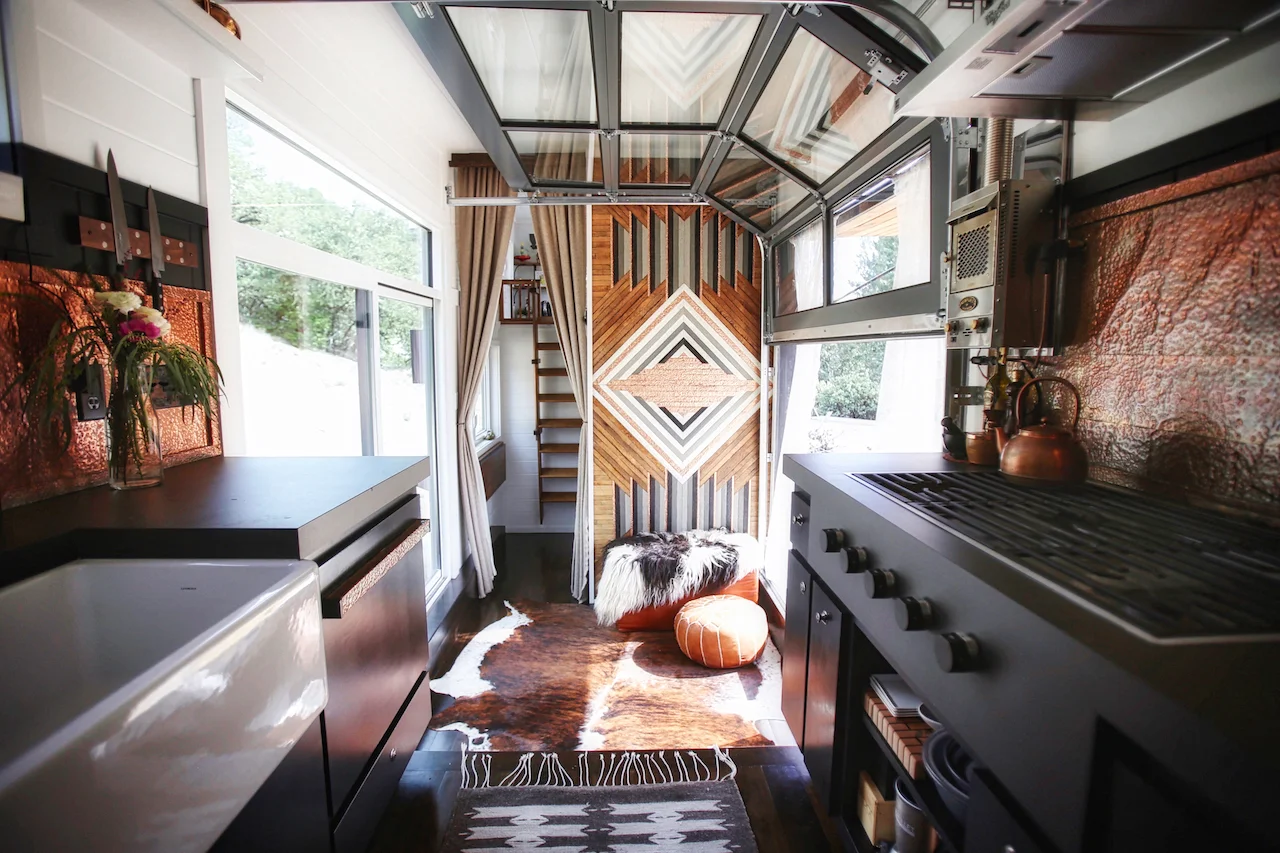
For a lot of people, the appeal of a custom tiny home is too much to pass up. Make no mistake, you should definitely add custom elements to your tiny home.
But don't lose sight of the central goal. You're here to design a tiny house that will help facilitate your lifestyle, so think about how it'll feel to experience your home day after day. Do you experience visual or spatial fatigue, or does your home feel fresh? Do you feel boxed in, or do you feel free to move about? Does your layout support your daily life, or are you constantly reaching for something that isn't there?
Here are some guiding principles to remember during your creative process. Keep them close and they'll deliver a tiny house that will serve you long-term. Forget them and you may just end up with a boxy, studio-on-wheels.
Spatial Awareness and Functionality
The #1 trap of designing tiny houses is focusing on square footage instead of spatial awareness and functionality. Square footage is irrelevant. You can make 300 sq. ft. feel like 600 or 100 entirely by what it looks and feels like to be in that space.
Our home was designed to have nine distinct living spaces, each one separated from the other by either a difference in level (steps or a ladder) or a soft partition (glass door, curtain, shoji paper). Each space also provides a unique functional purpose: master bedroom, kitchen, great room, office, bathroom, shower, walk-in closet, play-space, and guest bedroom.
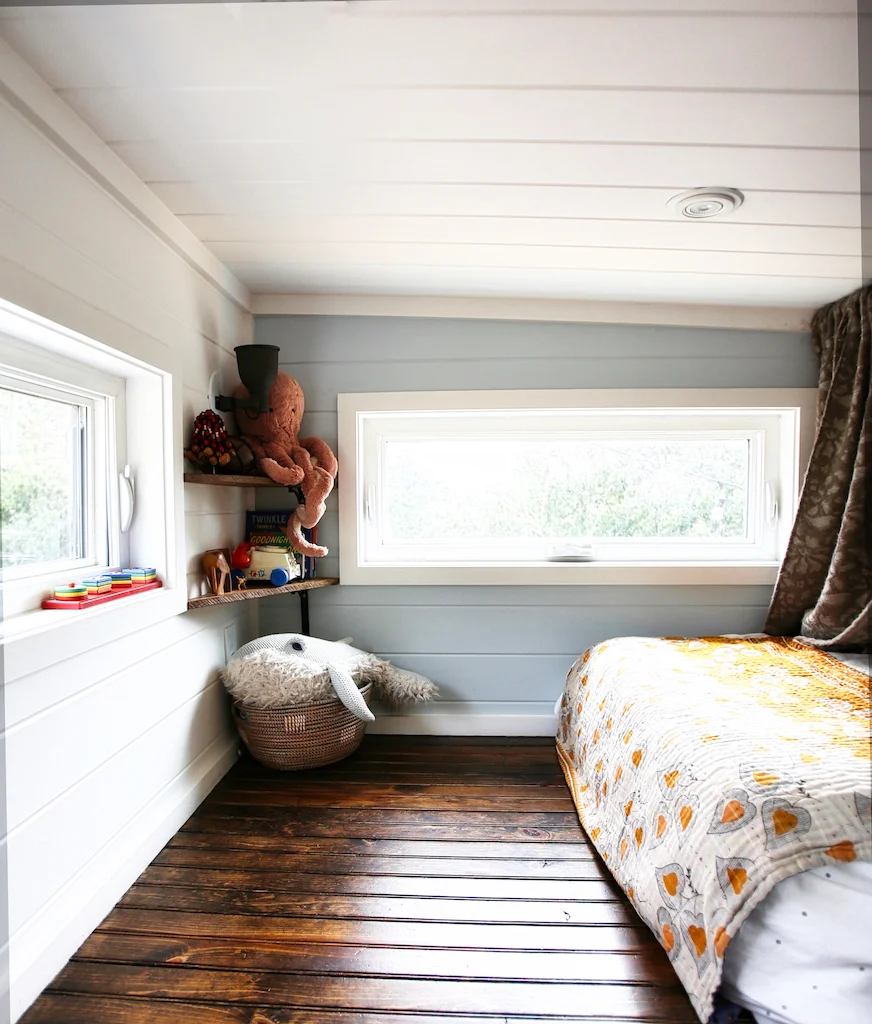
Apart from partitions and levels, we also used an L-shaped loft to dramatically increase spatial awareness and functionality. An L-shaped loft divides a full loft into two distinct spaces while using less space than a full-size loft and creating privacy for an extra bedroom. Win-win-win.
Each Room Should Have Its Own Feel
Each room should have its own unique feel, its own unique mode of invitation. When you're in a tiny house, it's easy to experience visual fatigue if every room looks and feels the same. However, if each room provides a different experience, then your home remains exciting and inviting despite being condensed into a tiny space.
In a similar vein, avoid concentrating too much on multi-functionality and instead think of having each room perfectly serve its unique purpose. In my experience, you'll find a flow that works for each room and not change it very often.
Natural Light
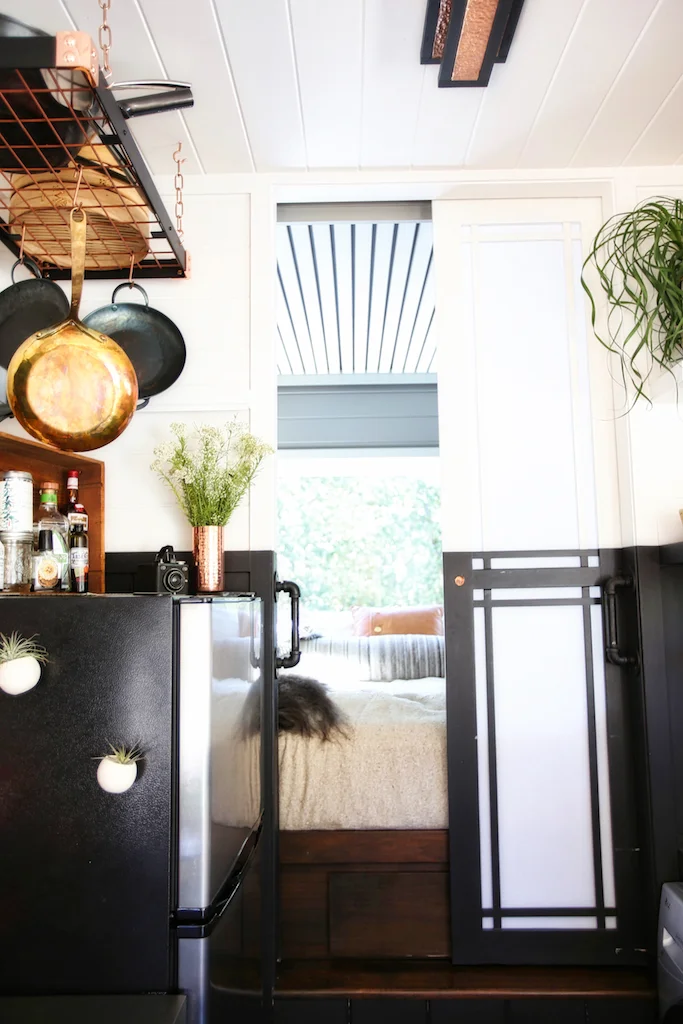
Lighting is important for any home, but for tiny houses, there is an added element: don't just think about getting natural light into rooms, think about how you can access the natural light in one room while you're in another.
Our bedroom has a giant portrait window that creates this incredible feeling of floating in the air when you lay back on the bed. And you don't just see this window from the bedroom -- you can look up at it when you're in the great room, and you can even see it from the loft.
The same thing applies to the giant slider and garage door in the great room. Because they're centrally located, you can access the views from almost any other room in the house, dramatically increasing their value.
Daily Access
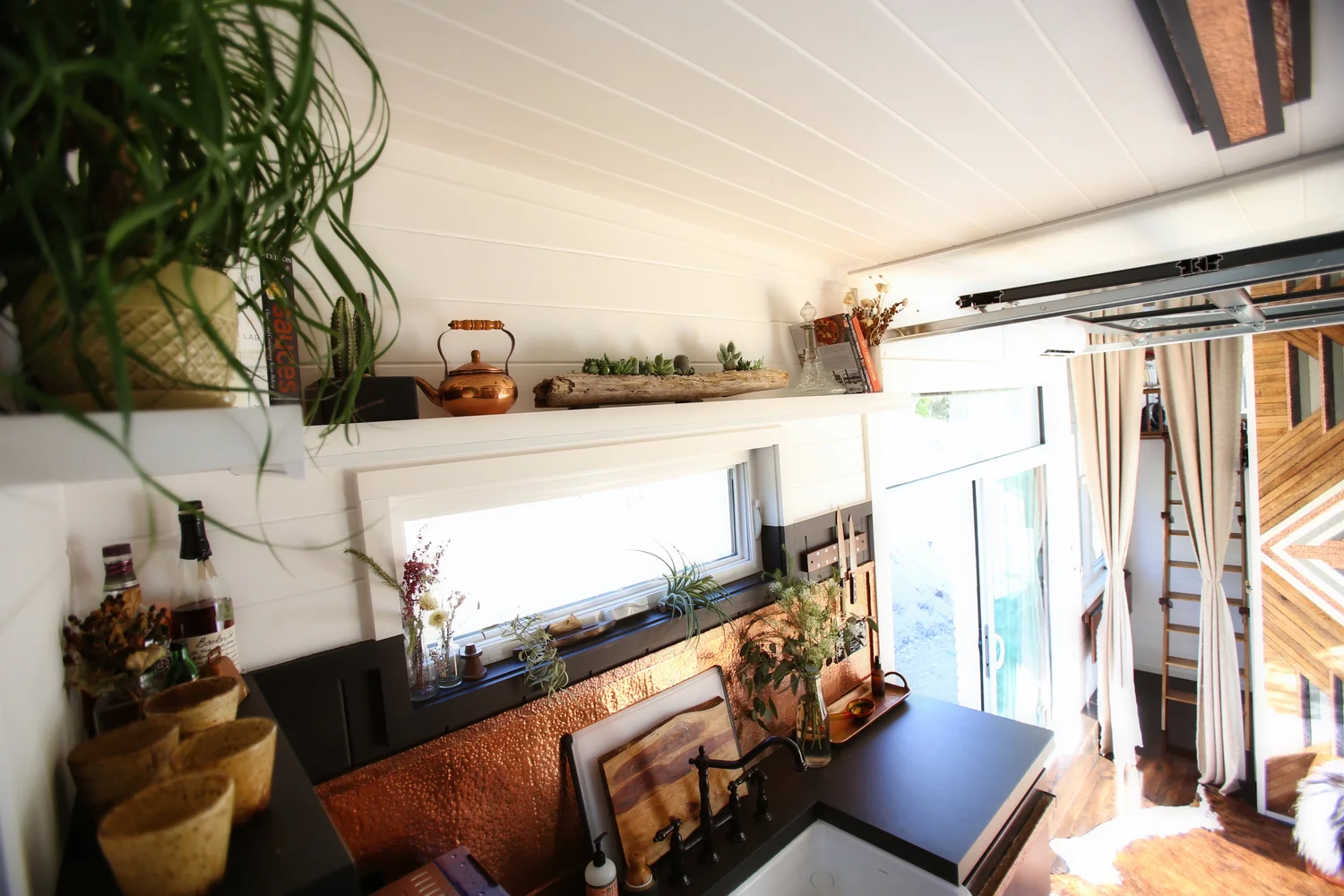
Think about the things that you access every day and make sure they're easily available. This seems easy, but a lot of people make big mistakes here, particularly related to closets and clothing. A lot of tiny house dwellers forego having a standing closet and this will inevitably be a daily annoyance. Daily annoyances add up over the course of your life, whether they amount to much in any single instance or not.
Gooseneck Trailers
The real pinch is that most tiny house dwellers end up sleeping in lofts, and this is, in my opinion, one of the biggest holdups on the movement as a whole. Gooseneck trailers are simply on another level of quality and livability, but for whatever reason, goosenecks haven't seen a more widespread adoption. For the $15-20,000 that a gooseneck might add to your budget, the long-term payouts in livability are tremendous. They offer a high-ceiling bedroom and allow for that bedroom to be easily expanded with a walk-in closet.
Stop Using Living Space for Storage
I've seen so many tiny homes reserve functional space for storage. The second loft becomes a storage loft. The living space is filled with drawers and cabinets. Before you resign yourself to this, remember that switching to a tiny home generally means access to more outdoor space.
Do yourself a favor. Stop thinking that your living space needs to be storage space and set up an outdoor storage area instead. This may free up an entire room in your house.
I've also found that owning less is an addiction. Moving into a tiny house didn't mean that we finally started acquiring more stuff... it meant that we were even more keen to throw out stuff we didn't use or need. We have well over 100 cubic feet of deep storage in our home, mostly unused, and it's probably at the top of the list of things I'd change about our house.